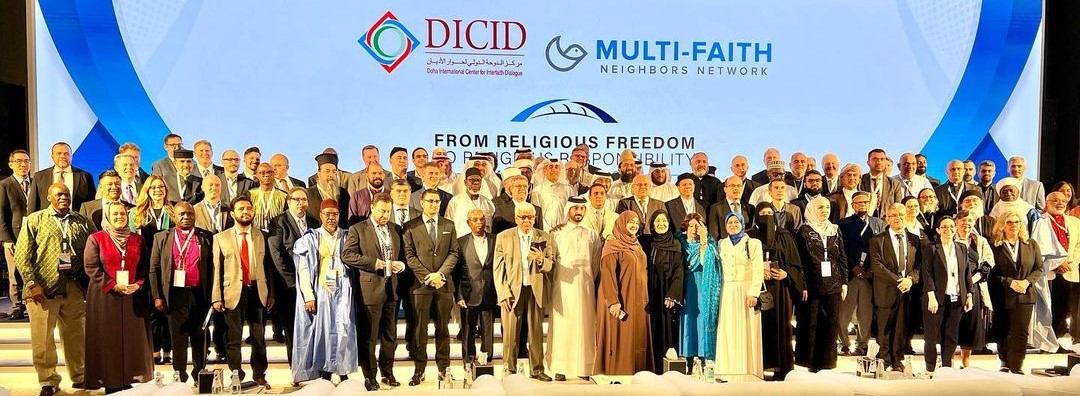
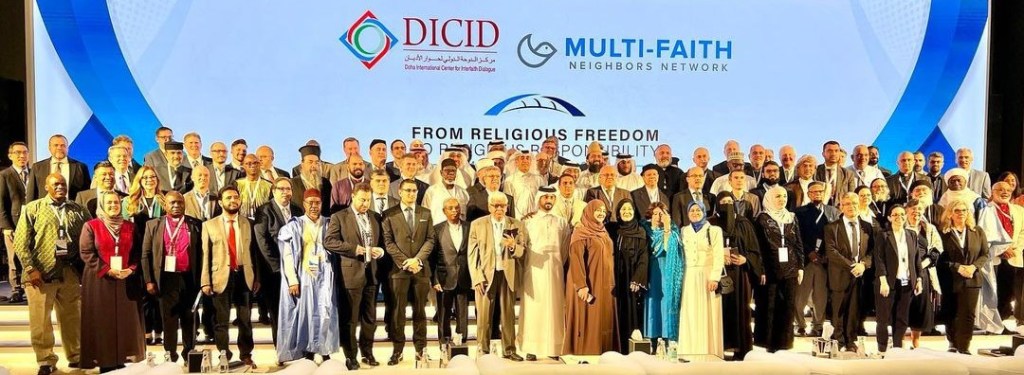
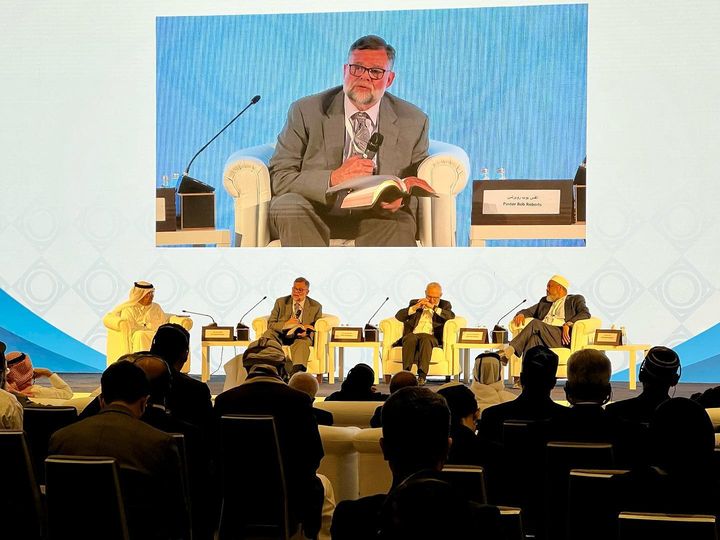
I am writing from a plane returning from a multi-faith conference in Doha, Qatar, entitled “From Religious Freedom to Religious Responsibility.” Faith leaders, philanthropists, ambassadors, dignitaries, academics, and influential people gathered to dream of a world filled with more understanding, mutual respect, and cooperation. Pastor Bob Roberts, Rabbi David Saperstein, and Imam Mohamed Magid created the Multi-Faith Neighbors Network to foster relationships that transcend what divides us. It enables us to explore how we are linked as faith partners, communities, and human beings created in the divine image so that we can be there for one another in the ways that matter most.
What does it mean to be responsible for one another?
The Rabbis grapple with this question in a commentary on this week’s Torah portion. Behar-Bechukotai warns that when we fail to walk in God’s ways, we “stumble over one another,” leaving us vulnerable to enemies and threats (Leviticus 26:37). We work against one another, making challenging times more challenging still.
As the Rabbis explain in Sanhedrin 27b, when one of us sins, all of us stumble. We face the consequences of one another’s actions and inactions. But, the rabbis explain, there is a solution. שכולן ערבים זה בזה, all Jews are responsible for one another (Sanhedrin 27b).
The word responsible, aravim, can be understood in two linked but distinct ways, teaches Rabbi Melanie Aaron. The first derives from the idea of areiv, a person who guarantees a loan, promising to pay if one cannot. According to this idea, we must take responsibility for the actions of others by doing our part to rebuild what has been broken, even when we are not personally at fault. We are not permitted to shrug our shoulders or walk away. On the contrary, we must own the actions of our brothers and sisters if we wish to stand strong as one community.
This is true within the larger Jewish community, but it is true in the global community as well. In Doha, Christians, Muslims, and Jews courageously took ownership of the problems caused by extremists in each of our faiths. We began hard, honest, and thoughtful conversations about how our communities have hurt one another, making promises to understand better how we can be allies.
That is one way to be responsible for one another. There is a second, based on the verb meaning to mix together, which shares the same Hebrew root. We must understand that none of us is an island. Every action we take has repercussions for those around us. As a Jewish people, we are inextricably linked by our past, our present, and our “common destiny.” Being responsible for one another is being responsible for ourselves. Rather than stumble over one another, there is an alternative: we can stand together, united by what we have in common. Doing this makes us better equipped to face all that life throws us.
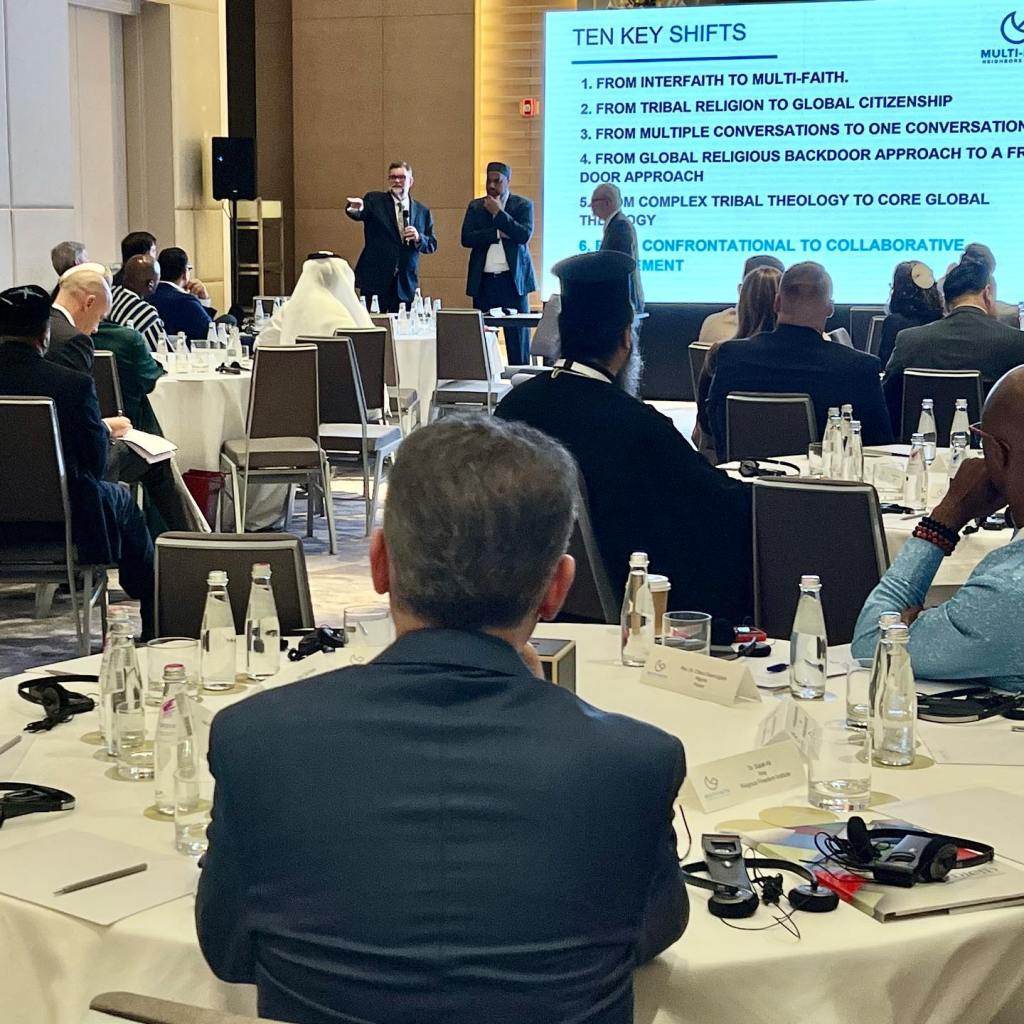

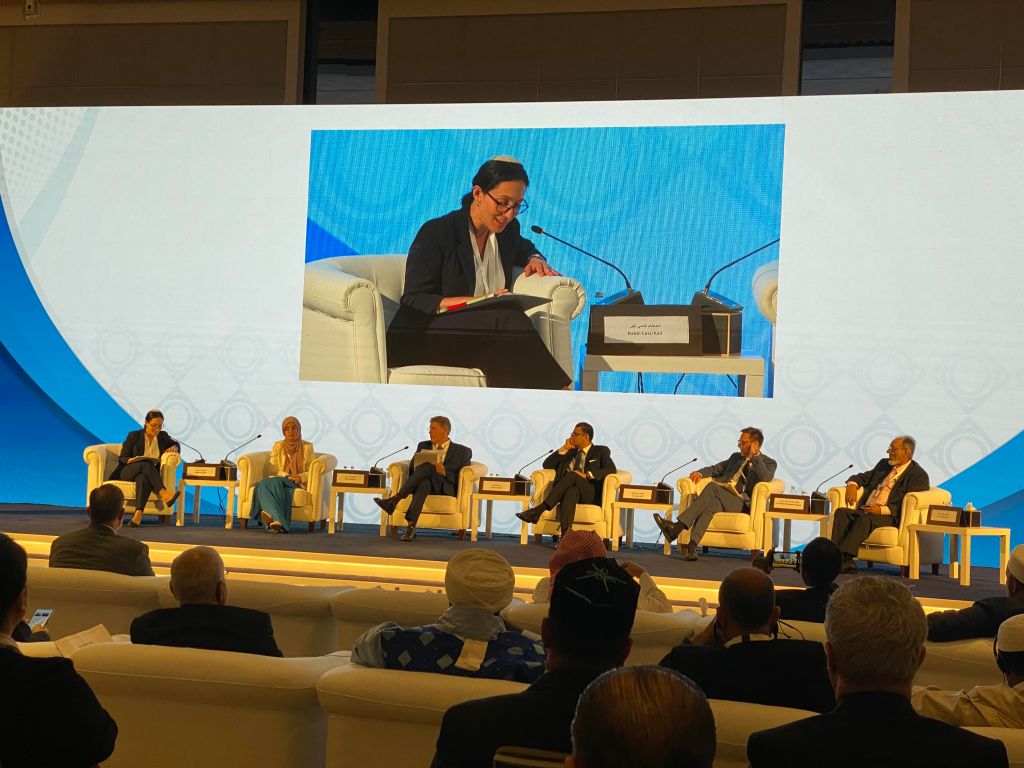
Jews must be responsible for one another, but that is not where our responsibilities end. As I sat in the conference, hearing stories about challenges and opportunities in countries worldwide, it became apparent that our actions have much more significant ripple effects. A Pakistani Imam and Pastor have found opportunities to partner their once-at-odds congregations to do what neither could alone: offering greater support to people in need within their communities. Clergy in Guinea-Bissau dreamed about combining resources to fight for increased religious freedom so Christians could build churches in areas currently denied them. I sat down with an Imam and Evangelical pastors in Los Angeles to consider ways we can support one another’s communities and the social action work in which we are already engaged.
I left the Multi-Faith Neighbors Network conference filled with hope, grateful for the relationships we forged and all we have yet to do together. May this be only the beginning.
Shabbat Shalom,
Rabbi Cassi Kail
 Rabbi Cassi Kail
Thank you Rabbi Cassie for representing the hopes and dreams of so many of us who want to see beyond what divides us and embrace what unites us to create a better and more compassionate world for all of us.
It is an honor to be in your congregation.
Love,
Richard and Debbie Klein
LikeLike